
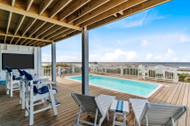
How to Protect a TV Outdoors: The Complete Guide
Posted by Emilyann Allen on 7th Oct 2026
Outdoor TVs rarely fail from one big storm. It's sun, humidity, bugs, and wind adding up quietly. Here's what actually threatens a TV outside, and how to protect it for good.
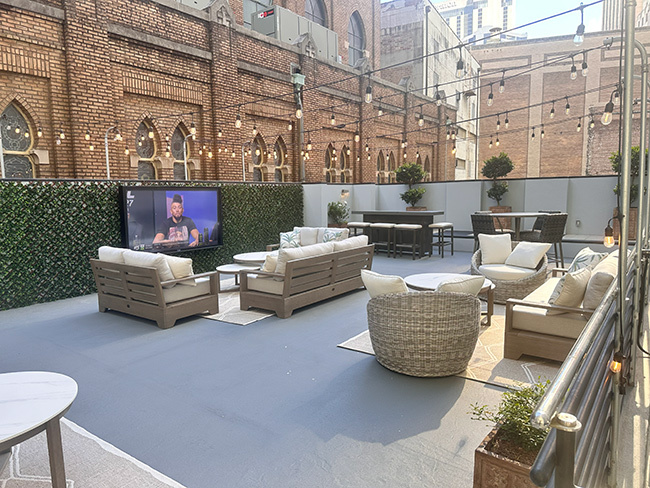
Most people assume that if a TV works fine indoors, it'll be fine outside for an afternoon here and there. A few hours of sun on game day, an evening on the patio, what's the harm? Then a few months go by. The picture starts looking a little dim. There's a faint haze behind the glass that wasn't there before. Something that worked all spring perfectly suddenly doesn't turn on one humid morning in July.
None of that happens because of one dramatic event. If you're trying to figure out how to protect a TV outdoors, the first thing to understand is that “outdoors” isn't one risk. It's five or six of them, stacking quietly on top of each other every single day the TV sits out there.
This guide walks through what actually threatens a TV outside, what protects against each of those threats, and how to think about the decision, whether that means a cover, a waterproof enclosure, or an outdoor-rated screen, based on where you live and how you actually use the space.
Why “Outdoor” Isn't Actually One Risk
Ask most people what damages an outdoor TV and they'll say rain. Fair enough, rain is the obvious one. But rain is rarely what actually kills a screen. It's usually humidity that never fully dries out, heat that builds up faster than the TV can shed it, or dust and bugs working their way into vents over months, not days.
Treat “outdoor protection” as one problem and you'll end up solving the wrong one, a rain cover that does nothing for a Phoenix summer, or an enclosure with no ventilation baking a TV in Florida humidity. The fix has to match the actual risk, and most yards deal with more than one of these at once.
Sun, Heat, and UV
Direct sun does two things to a TV: it heats the internal components past what they're rated for, and it slowly degrades plastic housings and screen coatings through UV exposure. A TV that's fine at 75 degrees can struggle badly once the inside of its casing climbs past 100, which happens fast in direct sunlight, even on a mild day.
Shade helps, but it's rarely enough on its own during peak summer hours. Look for a spot with afternoon shade if you can, and pay attention to how the TV feels to the touch after a few hours outside. If the back panel is hot enough to be uncomfortable, that heat is doing damage whether or not you can see it yet.
Rain, Humidity, and Condensation
Rain is the risk everyone plans for, and the easiest to underestimate. Wind-driven rain gets into gaps a straight-down downpour never would, especially around ports, seams, and any cover that isn't sealed on all sides. “Weatherproof” and “waterproof” get used almost interchangeably in this category, but the difference matters: a weatherproof cover sheds rain, while a genuinely waterproof enclosure keeps water out of the seams and ports even during a wind-driven storm.
Humidity is the quieter version of the same problem. It doesn't need a storm. A muggy week is enough to work moisture into a TV that looks perfectly dry from the outside, and that moisture becomes condensation the moment temperatures swing, which is exactly the setup for internal corrosion. We've written a full breakdown of how humidity actually causes TV failure and what changes that, worth a look if this is your main concern.
Cold Weather and Temperature Swings
Cold on its own usually isn't what breaks a TV. The swing is. A screen that goes from a freezing overnight low to direct sun by midday is dealing with rapid expansion and contraction, and that's hard on internal components and adhesives that were never built for it.
Manufacturers publish an operating temperature range for a reason, and most consumer TVs aren't rated anywhere close to what a winter night in the Midwest or Northeast actually hits. If your setup has to survive real cold, that's worth planning around specifically, and it's the main reason enclosures built for colder climates offer an optional thermostatic heater rather than relying on placement alone.
Bugs, Dust, and Debris
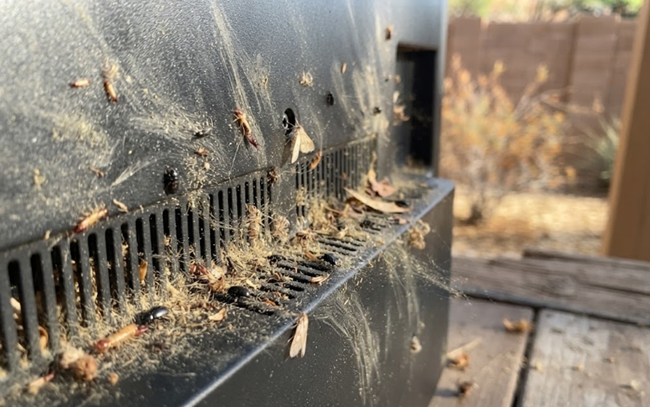
This one rarely gets mentioned, and it should. Vents that exist to help a TV cool itself are also a wide-open invitation for dust, pollen, and insects, and heat-generating electronics are genuinely attractive to bugs looking for a warm place to settle in.
Once dust builds up inside a TV, it insulates instead of ventilating, which makes the heat problem worse, not better. A TV that's slowly overheating because of built-up dust looks, from the outside, exactly like a TV that's just getting old, which is part of why sealed, filtered protection tends to matter more the longer a TV stays outside.
Wind and Storms
Wind does damage two ways: direct impact from anything it picks up and throws, and physical stress on whatever's holding the TV in place. A mount rated for a stationary indoor TV isn't necessarily rated for what a strong gust does to a screen sitting somewhat exposed on a patio or under a pergola.
If you're anywhere that sees real storms, hurricane season or otherwise, this is worth taking seriously before the season starts, not after the first close call. Securely mounted, fully enclosed setups hold up far better than anything left loose or propped in place.
Glare
Glare isn't really a protection issue; it's a usability one, but it belongs on this list because it's the difference between an outdoor TV you actually use and one that quietly becomes a very expensive lawn ornament. Bright sun washes out most screens badly enough that people give up watching altogether, long before anything is actually damaged.
Positioning matters more than most people expect. Facing a screen away from direct afternoon sun solves more of this than almost anything else you can buy. We've got a full, tested list of ways to cut glare if this is the piece you're dealing with right now.
Everyday Physical Risks: Kids, Pets, and Guests
The least dramatic risk is often the most common one. A dropped remote, a ball that gets away from someone, a dog that's a little too excited during a backyard party - none of it is rare in a space where people actually gather. Outdoor entertainment areas see more foot traffic and more chaos than a living room ever does, and screens take the brunt of it. A shatterproof, lockable front panel handles this category of risk better than almost any other single fix, since it's protecting against impact rather than the elements.
Can You just Use a Regular TV Outside?
Short answer: technically, sometimes, for a while. Longer answer: it depends entirely on how exposed the space is and how much you're willing to risk.
A covered patio with real airflow and no direct rain is a very different situation than an open deck that takes full sun and weather. A regular indoor TV might survive months in the first setup and struggle within weeks in the second. The problem is that damage from heat, humidity, and dust builds up slowly, so by the time it's obvious, it's usually too late to do much about it.
If you already own a TV you like, the more reliable path is protecting it rather than replacing it with an outdoor-rated model, which is often the more expensive option anyway.
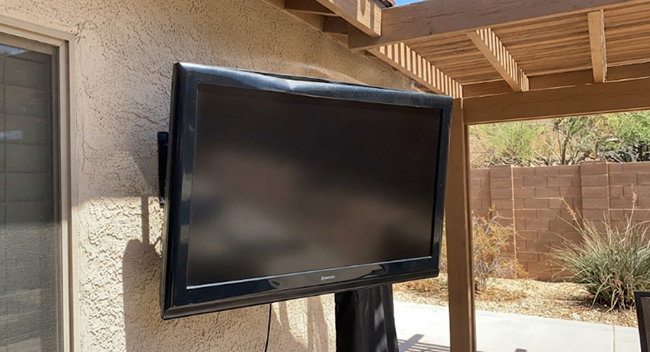
Your Three Real Options
Once you understand the risks, the choice comes down to picking the right level of protection for your specific setup. Whether you end up searching for a waterproof TV enclosure or a weatherproof one, the products in this category are all trying to solve the same layered set of risks at once, not just rain.
| Option |
What It Actually Solves |
What It Doesn't |
|
Weatherproof Cover |
Blocks rain and direct sun when the TV isn't in use |
Doesn't protect while you're watching, and rarely seals against humidity or bugs; cloth and many front panels are not shatterproof or as impact resistant as the polycarbonate front panels of robust TV enclosures |
|
Outdoor-Rated TV |
Built to handle brightness, heat, and moisture out of the box |
Expensive, still benefits from added protection in extreme climates; when the screens are broken, they often involve total replacement of the TV or expensive repairs as opposed to enclosures that have shatterproof polycarbonate front panels where just the panel can be replaced if ever needed |
|
Weatherproof Enclosure |
Increased activity around living rooms and game spaces |
|
None of these is universally right. A cover works fine if you're only using the TV occasionally and can commit to putting it on afterward every time. An outdoor-rated screen makes sense if you're building the space from scratch, not too worried about front screen replacement or repair costs, and your budget allows for it. An enclosure is usually the middle path. It lets you use a TV you already own or want, protected continuously, without needing to remember to cover it every single time. We've laid out a full comparison of enclosures against weatherproof TVs if you're trying to decide between those two specifically.
Within the enclosure category, size and budget matter too. Residential setups often do well with an affordable, lightweight option like The TV Shield E-Series, which offers impact, sun, rain, humidity, and dust protection without the added size and cost of direct extreme weather and commercial builds.
A Few Practical Tips, Regardless of What You Choose
Check the Placement Before Anything Else
Afternoon shade, airflow behind the screen, and distance from sprinklers solve a surprising number of problems before you spend a dollar on protection.
Don't Skip Ventilation
Sealing a TV in anything airtight traps heat, which causes its own kind of damage. Good protection accounts for airflow, not just weatherproofing.
Match the Protection to Your Actual Climate
Humidity, cold, and intense sun call for different priorities. What works in Arizona isn't necessarily what works in Florida or Minnesota.
Budget for Cables and Mounts Too, Not Just the Screen
Outdoor-rated cable management and a mount built for the elements matter more than people expect, and they're a lot cheaper to get right upfront than to fix after the fact.
Plan for the Off-Season, Not just Summer
A lot of outdoor TV damage happens during the months nobody's paying attention to the setup, not the months it's actually in use.
Starting from Zero is a Different Project than Upgrading
If you're starting completely from scratch, no TV, no enclosure, it's usually simpler, and often cheaper, to work from a ready-made outdoor TV kit that bundles a TV and a weatherproof enclosure together instead of buying an outdoor-rated screen separately.
For homeowners who'd rather not think about all of this every time the weather changes, this is exactly the kind of everyday, ongoing exposure that a weatherproof enclosure like The TV Shield is built to handle, sun, rain, humidity, cold, bugs, and the general chaos of a backyard, all at once, so you can protect a TV you already own instead of replacing it with something built specifically for outdoor use.
Frequently Asked Questions
Can I really use a regular indoor TV outside?
For a covered, well-ventilated space with limited direct weather exposure, often yes, for a while. The more exposed the space, the shorter that “while” tends to be, and the damage usually builds up long before it's visible.
Does a covered patio still need protection?
Usually, yes. A roof stops direct rain, but it doesn't stop humidity, wind-driven moisture, dust, or bugs, all of which are still fully present in a covered outdoor space.
Is a cover enough, or do I need a full enclosure?
A cover protects a TV that's off and covered. It does nothing while you're actually watching. An enclosure protects continuously, which matters a lot more in humid or bug-heavy climates than it does somewhere mild and dry.
Will an enclosure affect picture quality?
A well-designed one shouldn't; most use a clear or anti-glare front panel built specifically not to interfere with the picture. Placement still matters more than the enclosure itself when it comes to glare.
What's the single biggest mistake people make protecting an outdoor TV?
Treating it as a one-time decision instead of an ongoing one. The setup that worked fine in April can fail in August if nothing accounts for the season that follows.